
Surgery for Aortic Aneurysms
Today, the management of aortic aneurysms is often performed using endovascular techniques, which are minimally invasive and allow most patients to be treated without the need to open the chest or abdomen.
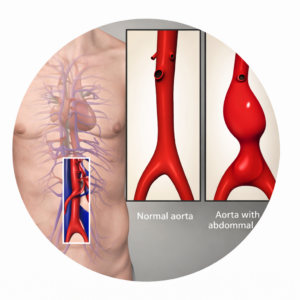
An “aneurysm” refers to a bulging or out-pouching of a section of a blood vessel, which can occur in any part of the body. When the wall of a blood vessel dilates, it becomes thin and stretched, similar to overinflating a balloon. As the aneurysm grows, the vessel wall is at risk of rupturing or tearing, a condition known as a dissection, which is a life-threatening emergency.
To prevent such complications, surgery may be necessary. In traditional open surgery, the weakened portion of the aorta is replaced with a durable tube graft, restoring the vessel’s integrity and ensuring safe blood flow. Endovascular procedures now allow this repair to be performed through small incisions, offering a safer and faster recovery for most patients.
Understanding Aortic Aneurysms
An aortic aneurysm refers to an abnormal bulging or out-pouching of a portion of the aortic wall. Aneurysms can develop anywhere along the aorta but most commonly occur in the chest (thoracic aortic aneurysm) or the abdomen (abdominal aortic aneurysm).
As the vessel wall dilates, it becomes thinner and more tense, much like an overinflated balloon. With increasing size, it becomes vulnerable to rupture or tearing of the vessel wall, a condition known as aortic dissection. Both rupture and dissection are medical emergencies and can be fatal without immediate treatment.
Importance of Surgery for Aortic Aneurysms
Why Surgical Intervention Is Needed
Not all aneurysms require immediate surgery. However, surgery for aortic aneurysms becomes essential when the aneurysm reaches a critical size, grows rapidly, or causes symptoms such as chest pain, back pain, or abdominal discomfort. Surgical treatment significantly reduces the risk of rupture and protects the patient from sudden, life-threatening bleeding.
Early diagnosis through imaging tests such as ultrasound, CT scan, or angiography allows timely decision-making and improves surgical outcomes.
Modern Endovascular Treatment Options
Endovascular Aneurysm Repair (EVAR)
Advances in vascular surgery have made endovascular techniques the preferred method for managing many aortic aneurysms today. Most patients can now be treated without opening the chest or abdomen.
In endovascular repair, a stent graft is delivered through small incisions in the groin and positioned inside the weakened portion of the aorta. The graft reinforces the vessel wall and redirects blood flow away from the aneurysm, reducing pressure and preventing further expansion.
This minimally invasive approach offers faster recovery, reduced hospital stay, and lower surgical stress, especially for elderly patients or those with other medical conditions.
Open Surgery for Aortic Aneurysms
When Open Surgery Is Required
Despite advances in endovascular treatment, open surgery for aortic aneurysms remains necessary in certain situations. Complex aneurysms, unsuitable anatomy, or very large aneurysms may require traditional open repair.
During open surgery, the affected section of the aorta is accessed directly through an incision in the chest or abdomen. The weakened segment is replaced with a durable tube graft, which restores normal blood flow and provides long-term protection against rupture.
Although open surgery involves a longer recovery period, it remains a reliable and effective treatment option when performed by experienced vascular surgeons.
Recovery and Long-Term Monitoring
Post-Surgery Care
Recovery depends on the type of surgery performed. Endovascular repair usually allows quicker return to daily activities, while open surgery requires more extended hospital care and rehabilitation. Regardless of the method, long-term follow-up is essential.
Regular imaging is needed to monitor the repaired aorta and ensure the graft remains secure. Managing blood pressure, quitting smoking, maintaining a healthy diet, and regular exercise play an important role in preventing future vascular problems.
Conclusion
Surgery for Aortic Aneurysms is a life-saving intervention that prevents rupture and dissection of the aorta. With modern endovascular techniques, many patients can now be treated safely and effectively without major surgery. However, open surgical repair continues to be an important option for complex cases. Early detection, expert evaluation, and timely surgical management are key to ensuring long-term safety and vascular health.